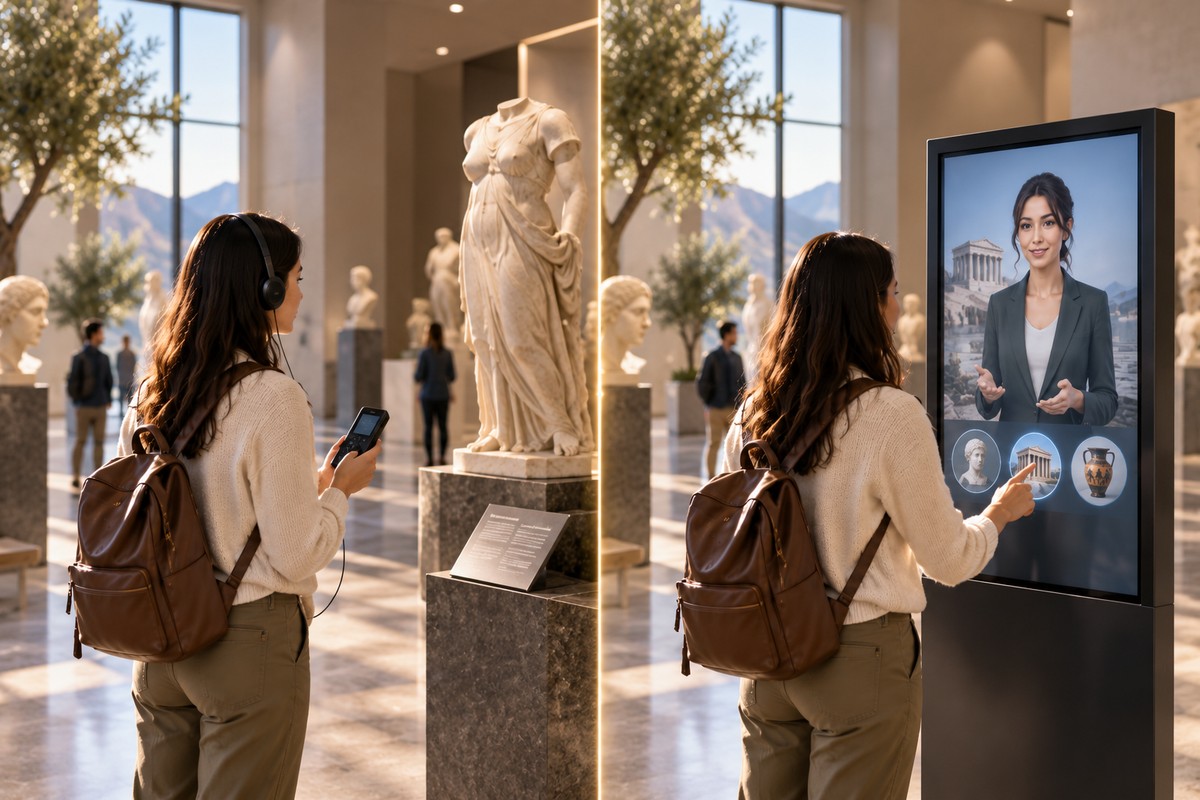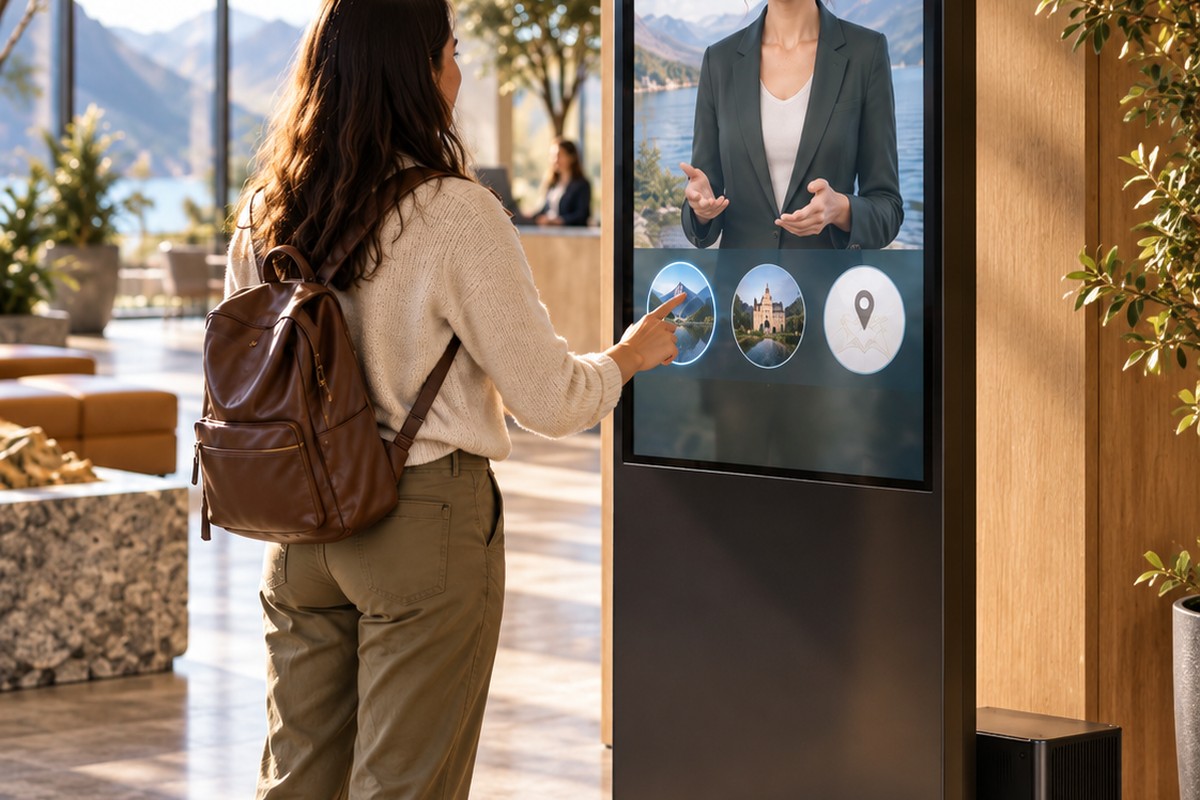
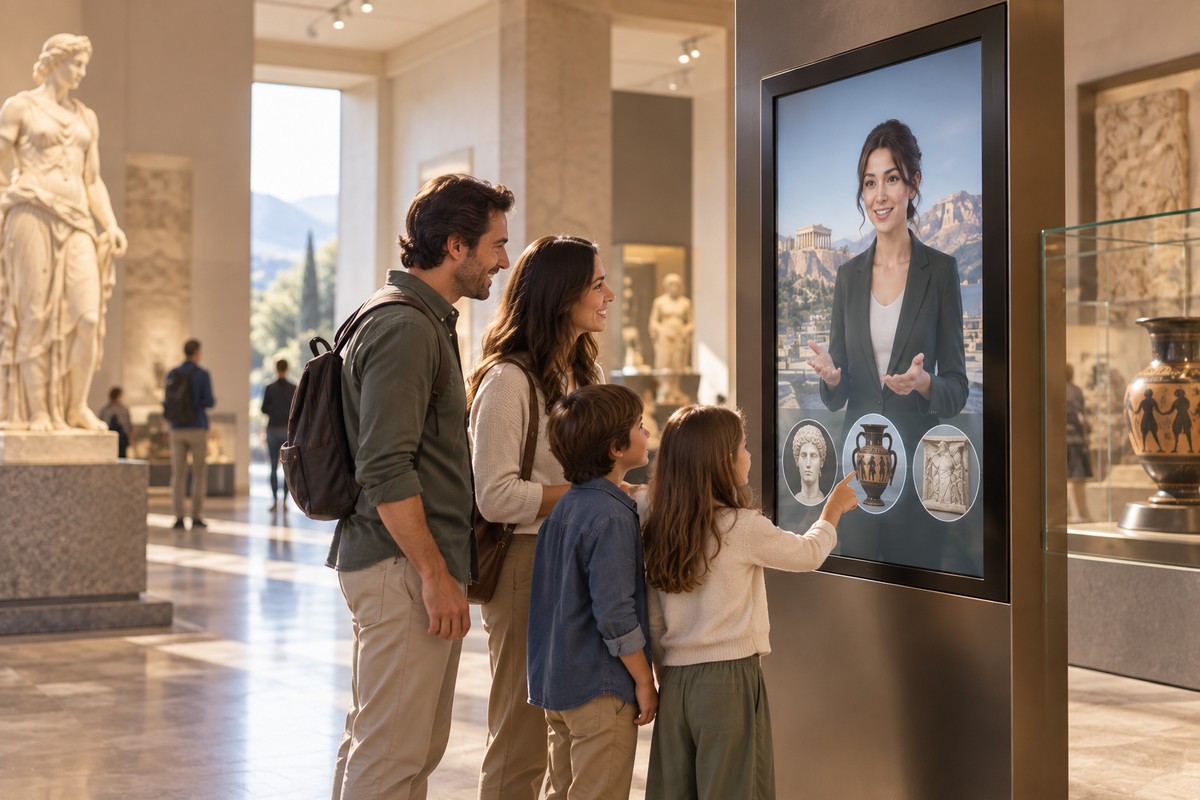
An AI museum guide is a digital guide that visitors can ask questions rather than simply follow through a fixed tour. It can explain objects, collections, stories and places using information approved by the museum, then respond to follow-up questions in the visitor's own words.
That makes it different from a conventional audio guide. An audio guide normally follows a prepared sequence. An AI museum guide can still deliver carefully written interpretation, but it can also move through that knowledge conversationally. One visitor might ask why an object was important, another might ask who made it, and another might want a child-friendly explanation.
How does an AI museum guide work?
At the simplest level, the visitor speaks or types a question. The guide interprets the request, finds the relevant information from its approved knowledge and creates a response. A visual character can then present that answer using speech, facial movement and on-screen text.
The knowledge layer is especially important in museums. A useful guide should be grounded in the institution's own interpretation, collection records, exhibition material, research and visitor information. That gives curators and interpretation teams control over the source material while still allowing visitors to explore it through natural conversation.
What can visitors ask?
The range of questions depends on the knowledge the museum chooses to provide. A guide might answer questions about an artefact, artist, period, material or historical event. It can also help with practical information such as gallery locations, facilities, accessibility, opening information or what to explore next.
This creates an opportunity to join interpretation and visitor services without pretending the avatar replaces either. It can handle repeatable questions and make information easier to reach, while staff remain important for human expertise, safeguarding, complex enquiries and the social experience of a visit.
A guide before, during and after the visit
An AI museum guide does not have to live on one kiosk. The same character and approved knowledge can support different stages of the visitor journey.
Before a visit, a website-based guide can answer questions about exhibitions, access, facilities and planning. During the visit, a kiosk or mobile experience can help with object questions and wayfinding. After the visit, a consent-based experience can help visitors revisit information they explored and continue learning.
The important design decision is to keep the role clear at each stage rather than trying to make one interface do everything at once.
Can an AI museum guide be a historical character?
It can, provided the museum has considered rights, accuracy and interpretation. Some projects may suit a modern museum representative. Others may use an original fictional host inspired by a period or collection. A historical person may be appropriate where likeness, copyright, publicity rights and interpretive framing have been checked.
Whatever character is chosen, the guide should not blur the line between documented history and invented dialogue. Clear content governance matters more when a digital character feels human and authoritative.
Does it need internet access?
No, not necessarily. A museum guide can be designed to run locally on a kiosk or local network, which is useful in galleries with unreliable connectivity or where the organisation wants to keep the conversational system on-site. Internet access can then be used selectively for live ticket links, bookings, current event information, offers, external resources or software updates.
This local-first approach also makes it possible to keep core interpretation available even if the connection is unavailable.
Where does an AI guide fit with traditional interpretation?
An AI guide should complement, not erase, labels, audio guides, printed material, websites, educators and front-of-house teams. Different visitors prefer different ways to engage. Some will want to read quietly. Some will choose a linear audio tour. Others will want to ask spontaneous questions.
The opportunity is to add a conversational layer to the interpretation mix, giving visitors another route into the same carefully governed content.
Frequently asked questions
Is an AI museum guide just a chatbot?
It can use similar conversational technology, but a museum guide can add a visible character, spoken interaction, a museum-specific role and information grounded in the institution's approved content.
Can it answer questions about our own collection?
Yes. Collection records, exhibition text, research, FAQs and other approved sources can be prepared as the knowledge used by the guide.
Can it run on a museum kiosk?
Yes. A local deployment can run on an on-site kiosk or display and can be designed to continue operating without a continuous internet connection.
Does it replace museum staff?
It is better treated as an additional interpretation and information channel. Human staff remain essential for specialist judgement, safeguarding, complex discussions and the personal side of the visitor experience.
Turn this idea into your own avatar.
Tell us who your avatar should help, what it needs to know and where it will appear. We will discuss a focused first deployment around that job.
Discuss your avatar