Businesses choosing an interactive AI avatar quickly reach an architectural question: should the experience depend on cloud services, run locally, or combine the two?
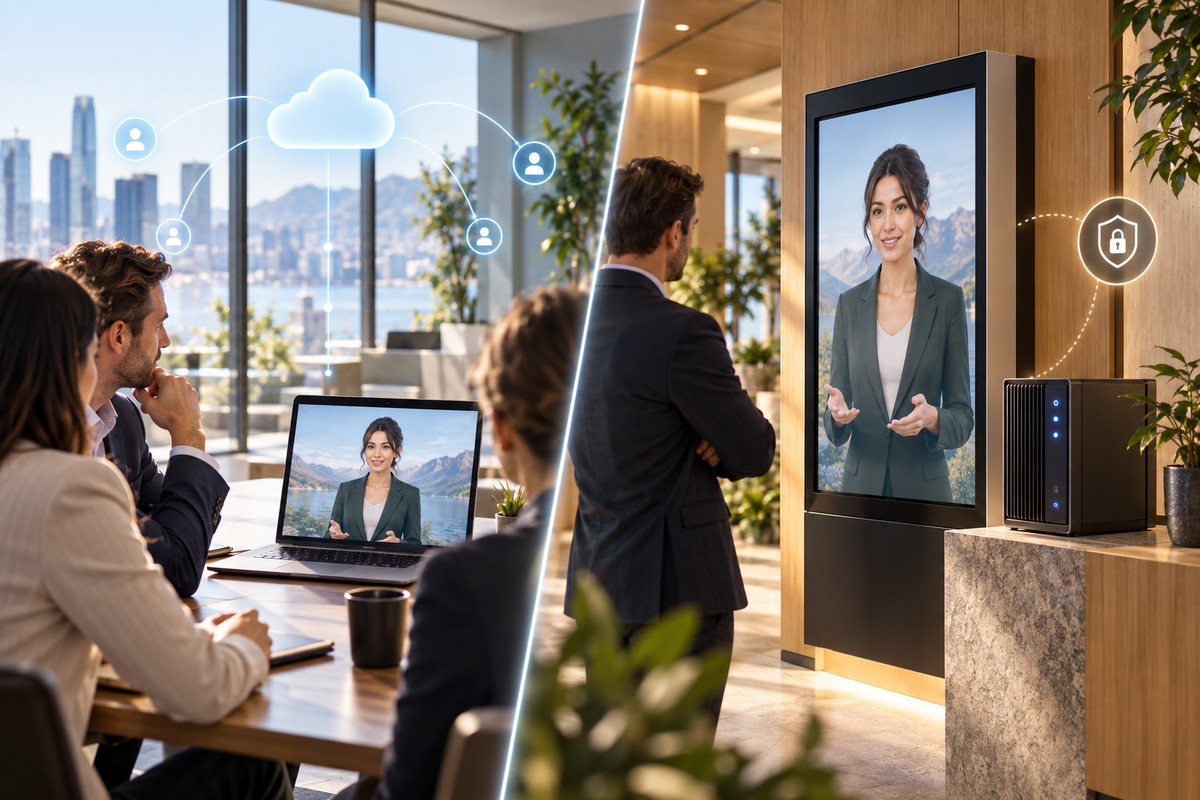
There is no single answer for every organisation. Cloud systems can provide large-scale infrastructure and centrally managed models. Offline or on-premise systems can keep the core experience on local hardware and continue operating without a continuous internet connection. A hybrid approach can keep the conversation local while using the internet only for services that genuinely need live data.
Cloud AI avatars
A cloud-based avatar sends some part of the interaction to remote services. That may include speech recognition, language processing, knowledge retrieval, text-to-speech, animation or several of those components together.
This can make deployment easy because much of the computing is managed elsewhere. It can also make it straightforward for a provider to update models centrally. The trade-off is dependency: the experience relies on connectivity, provider availability, account limits and the pricing model attached to those services.
Offline and on-premise AI avatars
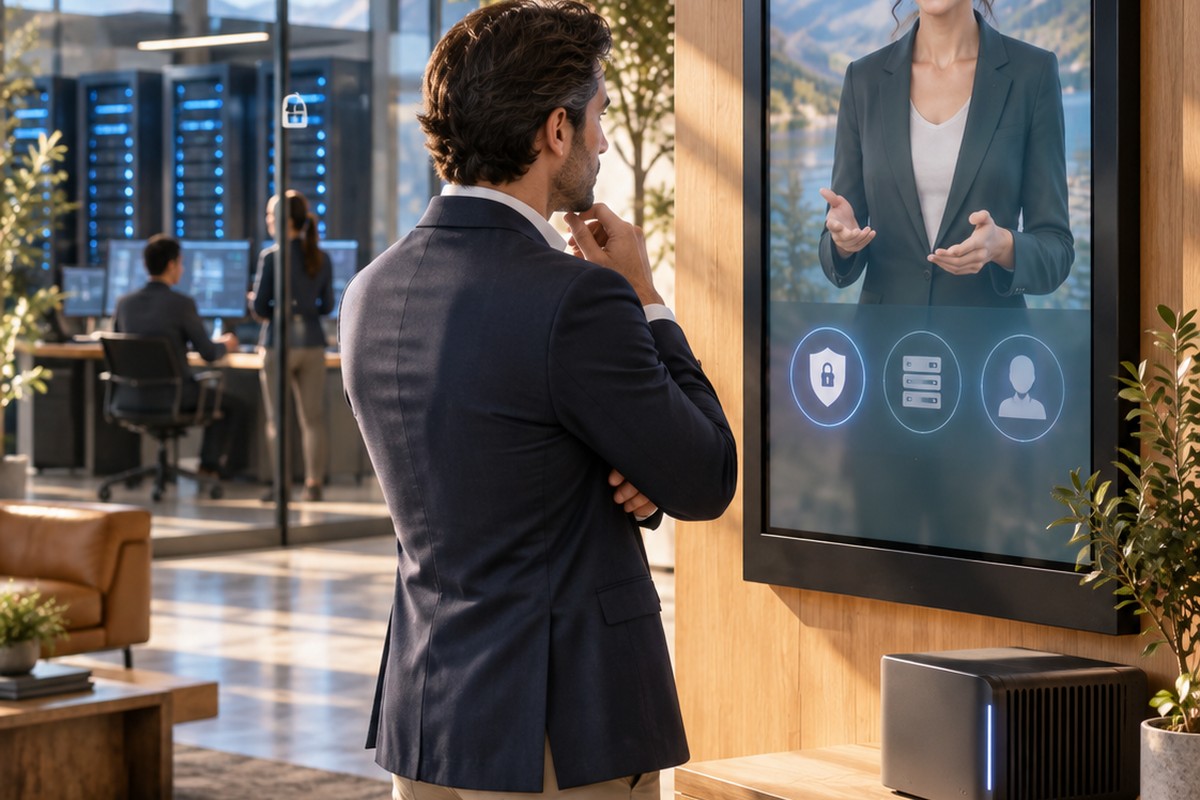
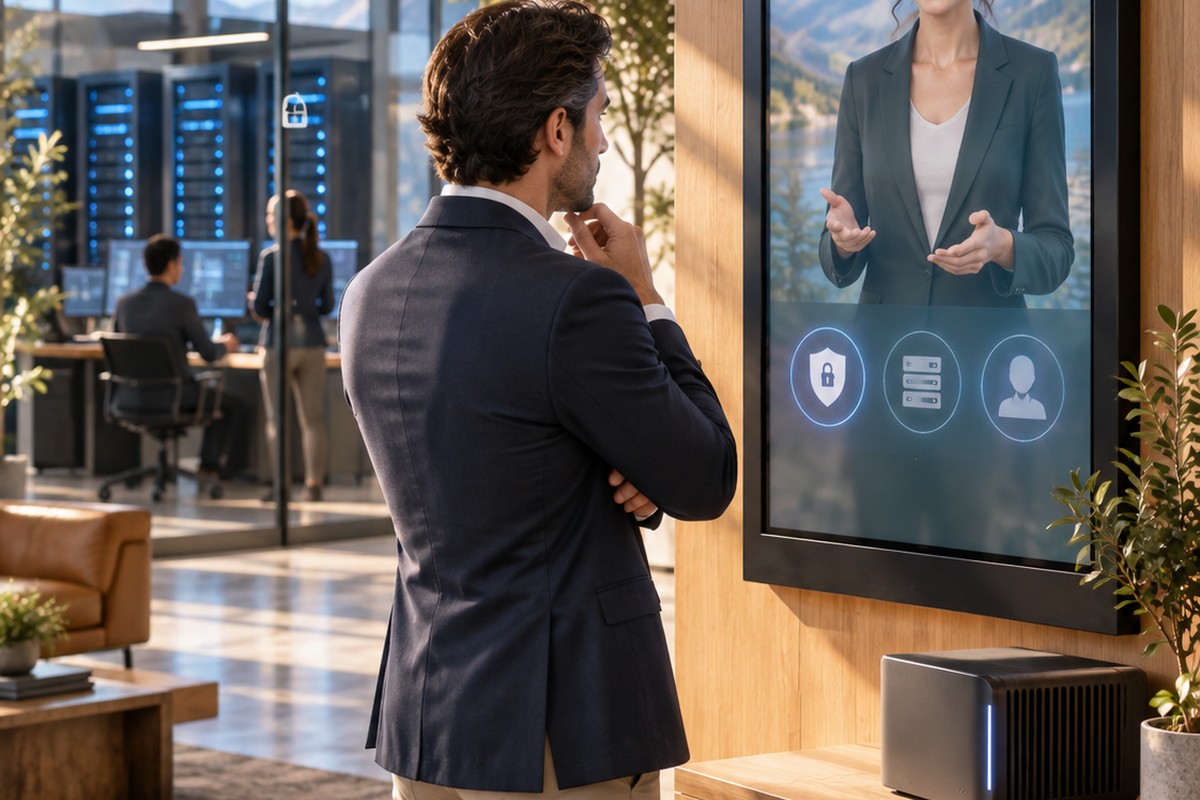
An offline or on-premise avatar runs its core components on hardware controlled by the organisation or installed at the venue. Depending on the system, that can include speech, conversational logic, approved knowledge, voice generation and the visual avatar runtime.
The main benefit is operational independence. A kiosk can keep answering its core questions when the internet is down, and the business can avoid sending every interaction to an external AI API. The organisation also has more direct control over the local hardware and update schedule.
Comparison at a glance
| Area | Cloud avatar | Offline / on-premise avatar |
|---|---|---|
| Internet | Usually required for core functions | Core functions can continue locally |
| Compute | Provider infrastructure | Local machine or local network |
| Usage pricing | May include per-use service charges | No external per-conversation API fee required for local runtime |
| Updates | Often central and automatic | Planned local or connected update process |
| Live web data | Straightforward | Available when optional connectivity is enabled |
| Outage behaviour | Depends on remote services | Core experience can remain available |
| Data path | May leave the site | Can be kept within the local environment |
Privacy and data control
Local operation can reduce the amount of conversational data that needs to leave the site, but architecture alone does not make a system compliant. Organisations still need appropriate access controls, retention rules, security updates, lawful processing and clear policies for any conversation history they choose to store.
The useful distinction is control. With an on-premise design, the organisation can decide which components run locally and which external services, if any, are permitted to receive data.
Cost and predictability
Cloud systems can be attractive because there is little hardware to manage, but usage-based services can make costs rise with traffic, audio minutes, model calls or generated media. Local deployments shift more of the cost towards hardware, setup, maintenance and support.
For an installation with frequent repeat use, such as a public kiosk, museum exhibit or training station, avoiding a cloud charge for every question can make operating costs easier to forecast. The correct comparison should include the full lifecycle rather than only the initial setup fee.
Reliability and connectivity
A website used by remote visitors already assumes internet access, so cloud dependency may be acceptable. A kiosk in a heritage building, exhibition hall, temporary venue or private network has different constraints.
If the core interaction needs to remain available during an outage, local operation offers a clear advantage. Connected features can then fail gracefully instead of taking the whole avatar offline.
A hybrid local-first model
Many organisations do not need to choose an absolute cloud-only or offline-only position. A hybrid design can keep the conversational avatar and approved knowledge local, then connect selectively for live bookings, ticketing, offers, current venue data, external links or software updates.
This creates a practical separation between what must always work and what is genuinely enhanced by the internet.
Frequently asked questions
Which option is cheaper?
It depends on traffic, hardware, support requirements and the cloud services being used. Cloud can reduce local infrastructure, while local deployment can avoid per-conversation external API charges.
Is offline always more private?
Local operation can keep more processing on-site, but privacy depends on the complete design, including logging, retention, access control, integrations and organisational policy.
Can a local avatar still use live online information?
Yes. Connectivity can be enabled for selected services without making the core conversation dependent on the cloud.
Turn this idea into your own avatar.
Tell us who your avatar should help, what it needs to know and where it will appear. We will discuss a focused first deployment around that job.
Discuss your avatar